Friday, February 8, 2013

LAD #31

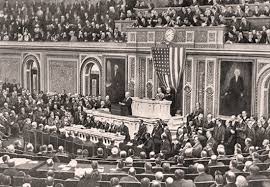
Summarize 14 points:

Wilson had 14 idealistic points to forgive Germany and create world peace after the Great War. The 14 points were viewed as lenient and was not accepted by the Allies. Wilson had to sacrifice many of his points to ensure that the League of Nations would not be created. In the end, the Treaty of Versailles was made and America did not sign it. This treaty angered the Germans and was a reason why Hitler came to power and WWII.
Wednesday, February 6, 2013

LAD #30

Summarize Schenck Vs.US Case

Charles Schenck was a socialist advocated who believed that the war would only benefit the rich and hurt the poor. Thus, he participated in several anti-war activities that were in violation of the Espionage Act. He was arrested in 1917 because he was against the war effort. He appealed his case to the Supreme Court saying that the act violated the first amendment. The court unanimously decided to uphold his conviction. Holmes decided that his actions were a "clear and present danger" to the country for working against the war effort. In addition, the certain rights that had to be sacrificed in war time for the good of the nation. Thus, he got punished for something he would have not been punished for during peacetime.


Saturday, February 2, 2013

LAD #29

Summarize Keating-Owen Child Labor Act

This act was passed in 1916 and helped fix the dangerous and intense child labor in America. It was based on the allowance for Federal intervention on interstate commerce. Is says that goods made by children under a certain change cannot be transported in between states. It affected only children who worked in factories and mines, not child workers in agriculture. The laws that were put into place are still active and backed up by many state laws.


LAD #28

Summarize Wilson's First Inaugural Address
Wilson starts by apologizing for the recent Democratic shift in government. He chooses to idealize change as an attempt to restore Republicans and his other opposition. He also praises the American Identity. He says that the government under him will exist more on the behalf of the people than has it before. He then lists the problems in the United States, including unfair low tariff laws and big businesses, which is a Democratic platform. He turns to domestic affairs dealing with poverty and education. His inauguration is day filled with dedication and promise.


LAD #27

Summarize The Clayton Anti-Trust Act

This act serves to expand and legitimized the government's stand against the corrupt policies of Big Businesses that was a little more symbolic as stipulated by the Sherman Anti-Trust Act before it. It legalization the discrimination in price between multiple products that are similar, such as railroads. This is not meant to restrict the producers choice from selecting customers in bona fide transactions to allow full flow of free trade. In addition, it prohibits the practice of granting rebated and other malpractices of price shifting to force out competitors from business.Another stipulation is that it calls for the promotion of free trade.


Tuesday, January 22, 2013

LAD #26

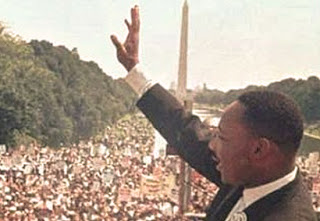
Summarize MLK's Speech:
He begins by stating that even though slavery was ended 100 years ago, blacks were not really free. They were still oppressed by segregation, discrimination, poverty and injustice. He then declares that the promise of life liberty and pursuit of happiness was not really granted to all men. He believed that there was room for change. He wanted a change now If there was no change, there would be a revolution, not full of hate, but a peaceful and disciplined revolt. The movement cannot end until there is no question of equality. He urges to listeners to go back knowing that the situation will change. MLK claims he has a dream that America can uphold. he hopes that everyone will be equal someday, especially in the South. He hopes that the blacks and whites will join together like brothers and sisters. He dreams that people will not be judged by their skin color and finally everyone will be free.


Sunday, January 6, 2013

LAD #25- Dawes Act

Summarize Dawes Act
The Dawes Act allowed the President to survey the Native American tribal lands and be able to divide the areas into allotments for the each Native American families. The Dawes Act is regarded to have helped the Native Americans and it was revised many times.